How to Potty Train a Puppy: A Step-by-Step Guide

1. Understand How Puppy Potty Training Works
Puppies don't automatically know where they are supposed to eliminate in a house and so need to be given repeated chances to practise the behaviour they should display together with clear feedback when they do it correctly.The speed with which a puppy learns is affected by its age, earlier experiences, its health, and the way it has developed individually; moreover, since young puppies have poor bladder control they need to go to the bathroom frequently.The American Kennel Club suggests that you set up a regular routine and take your puppies out at key times such as after they have woken up, had their meal, drunk their drink, and played. For more information, see the AKC's potty training guide.The aim goes beyond just preventing accidents; it is to get your puppy to develop a habit that it can repeat within your home.2. Create a Consistent Potty Training Schedule
One of the most useful tools when training a puppy to use the bathroom is having a regular routine; instead of waiting for an accident, you should schedule bathroom breaks to coincide with your puppy's daily activities.Take your puppy to the designated bathroom area:- Immediately after waking up.
- Following eating and drinking water.
- After naps.
- After play sessions.
- Following a period in a crate.
- Before bedtime.
- When you see that it's time for them to be replaced.
Sample Puppy Potty Training Schedule
| Early morning | Go directly outside after waking |
| After breakfast | Offer another potty break |
| Mid-morning | Bathroom break after play or a nap |
| Lunchtime | Potty break before and after eating, as needed |
| Afternoon | Frequent breaks based on age and activity |
| Evening | Bathroom breaks after meals and play |
| Before bed | Take your puppy outside one final time |
| Overnight | Provide breaks if your puppy cannot yet stay dry |
3. Choose One Bathroom Spot
Select an outdoor spot that is easy to access, and use it regularly during training. Take your puppy to this location on a leash, reduce the number of distractions, and allow them time to sniff around and get used to it.Just give your puppy a simple verbal signal like "Go potty". When they start to eliminate, say this calmly and then reward them as soon as they have finished.Rewards might be a little treat, some praise, or a short playing session. What's important is keeping to the right timing—that is, the puppy should associate the reward with going to the proper place.If the puppy doesn't go out of the house, then take it back inside and keep a close watch on it. Instead, try again a short time later than letting it roam around indoors unattended.Apartment dwellers might need to have a suitable outdoor space or a fixed indoor potty area. When deciding on the best choice it is important to take into account the local sanitation rules and get advice from a veterinarian.4. Supervise Your Puppy Indoors
It's simpler to prevent accidents than to have to clean them up over and over again. When giving your puppy early training, it's best to keep it in the same room whenever you can and watch for any changes in its behaviour.Common signals include:- Sniffing the floor repeatedly.
- Circling or wandering away.
- Suddenly stopping play.
- Moving toward the door.
- Becoming restless or whining.
- Either squatting or starting to empty the bladder.
What are you supposed to do in the event of an accident?
It's usual for accidents to happen when a puppy is learning, and responding to them with anger or by punishing them will only make your puppy feel afraid without teaching it where it should go.If you notice your puppy starting to eliminate indoors, try to calmly interrupt them and then take them to the right bathroom area; give them a reward if they go in that area.If you find an accident later on, clean it well using a pet-safe enzymatic cleaner that is appropriate for the surface, since persistent odours may lead to the animal visiting that area again.Do not rub your puppy's nose in the mess or administer any form of physical punishment; instead, concentrate on prevention, consistency, and rewarding it when it has successfully gone to the bathroom.If a dog which has been trained to use the house begins to urinate inside, or if you see it straining, the presence of blood in the urine, an unusual thirst, or the need to urinate frequently, get in touch with a veterinarian since medical problems can at times lead to accidents. For advice on inappropriate urination see VCA's guidance.6. Is it possible to potty train a puppy in seven days?
A week is useful for setting up a routine and assessing early progress, but it is not certain that potty training will be fully accomplished within seven days.Certain puppies start to show improvement soon, whereas others require weeks or months of regular training. The time it takes can be influenced by the puppy's age, its health, its prior training, the amount of supervision it receives, and how frequently it is given bathroom breaks.During the first week, focus on achievable goals:- Set a routine for using the bathroom.
- Look out for the early warning signs in your puppy.
- Decrease the number of opportunities for accidents that can occur without supervision.
- Reward successful outdoor elimination.
- Record the times of accidents and make adjustments to the routine.
- Maintain calm and consistent training.
An Optional Structured Training Resource
There is a preference among some owners for a written plan which puts the training tasks and the troubleshooting advice into one resource.A possibility is Potty Training in 7 Days: The Accident-Free Method for Busy Owners. The sales page states that the digital product features a day-by-day training blueprint, guidance on creating a schedule for busy owners, adaptations according to the puppy's age, and advice tailored to different kinds of living situations. It also promotes four additional guides which deal with crate training, accident cleanup, puppy training, and living in an apartment.The seller is now showing a promotional price of $19 and offers a 60-day money-back guarantee. However, since prices, availability, and the refund conditions may change, it is important to check the details on the sales page before making the purchase. These statements are made by the seller and have not been independently verified.If you want your dog's behaviour problems dealt with by well-structured written instructions rather than by gathering advice from a number of different sources, then this resource may be worth looking at. However, it should not be used as a replacement for veterinary care or for individual assistance from a qualified trainer when a dog has persistent or complicated behaviour problems.
7. Common Puppy Potty Training Mistakes
Even well-intentioned owners can unintentionally increase the difficulty of training. Be alert to these common issues.Changing the Schedule Too Often
It is more difficult to predict when you'll need to go to the bathroom if your routine is irregular, so try to keep your mealtimes and bathroom breaks fairly regular and make adjustments as your puppy grows.Waiting for Your Puppy to Ask
A few puppies learn to give signals early on, but others show only very slight signs. Instead of depending completely on your puppy to send you signals, keep giving them the scheduled breaks.Giving Rewards Too Late
If you wait until after you've returned indoors to give your puppy a reward, there is a possibility that they won't associate the reward with eliminating outside. You should praise and reward the desired behaviour immediately.Allowing Too Much Freedom Too Soon
A puppy with access to the whole home might discover some concealed spots where it can eliminate. Expand its access step by step once it has shown reliable habits.Expecting Every Puppy to Learn at the Same Speed
It is possible for comparing your puppy to another dog to lead to unrealistic expectations; instead, you should concentrate on your puppy's own progress and make changes to your method if necessary.8. How to Stay Consistent When You Have a Busy Schedule
People who are busy ought to have a practical plan, not an unrealistic claim that training needs no time or supervision.Begin by looking at the times when accidents are most likely; keep a straightforward record of your puppy's meals, bathroom breaks, accidents, and successful trips, as this might show that your puppy always needs to go shortly after eating or after waking.Make all the necessary preparations ahead of time, such as getting a leash, some treats, cleaning supplies, and waste bags. Ask household members to follow the same routine and use the same verbal signal.If your work schedule makes it impossible to take frequent breaks to use the bathroom, arrange for help. While a guide may assist you in organising your method, it cannot overcome a puppy's natural need to go outside or take the place of proper supervision.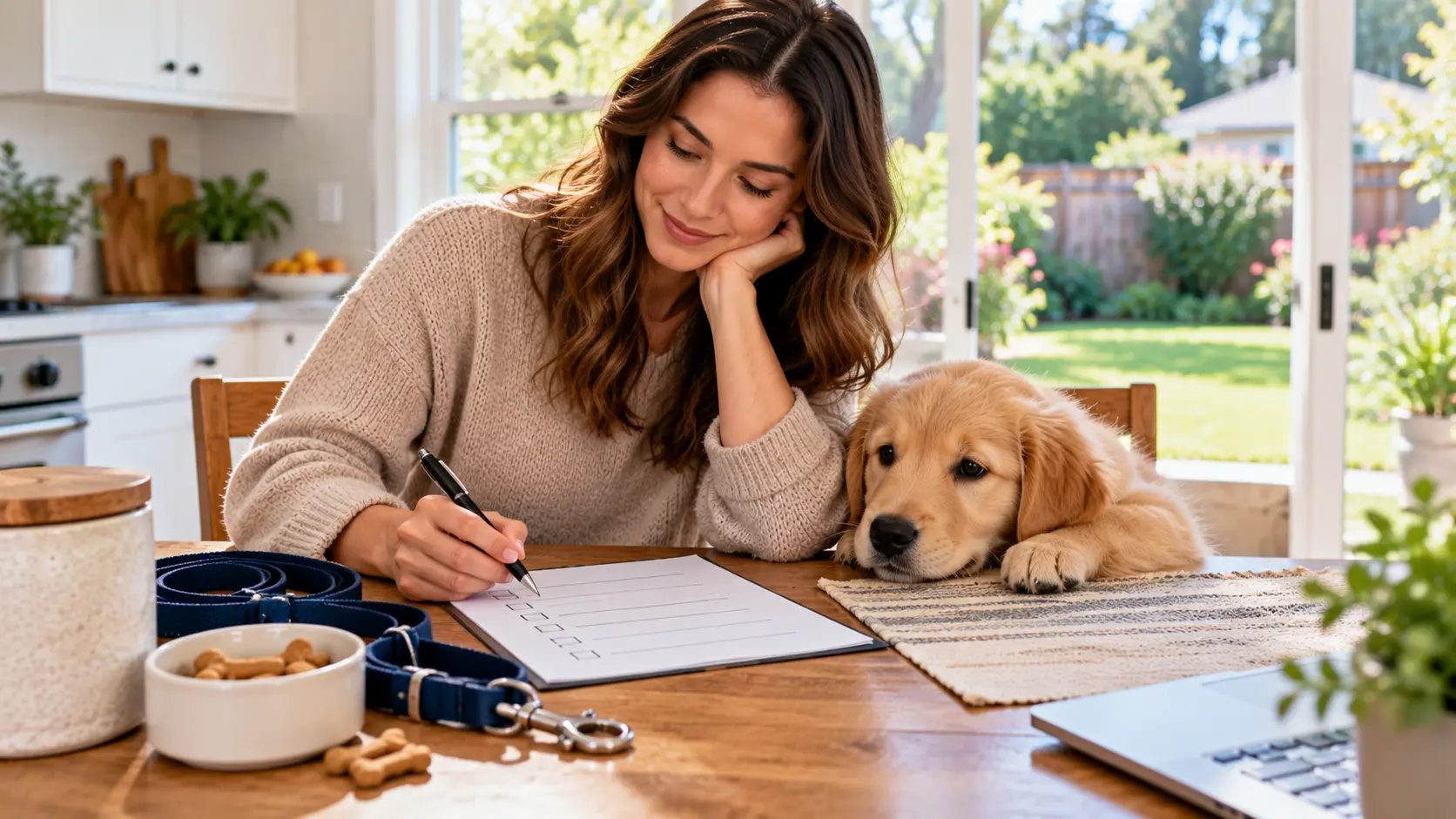
See the Training Guide Details
9. Frequently Asked Questions
How frequently should I take my puppy out of the house?
Little puppies may have to go to the bathroom once or twice every hour while they are awake, as well as after eating, having a nap, drinking, and playing. You should modify how often you give them bathroom breaks according to their age and particular requirements.How can you most quickly potty train a puppy?
The best course of action is to stick to a regular routine, provide close supervision, make sure the puppy has frequent access to the bathroom, and give instant rewards when the puppy eliminates in the right place. However, there is no guaranteed time frame for each individual puppy.Is it possible to potty train a puppy while working a full-time job?
Certainly, but you might have to ask a dog walker, a reliable neighbour, or a pet sitter to look after your dog. A young puppy may not have the physical ability to wait through a whole working day.Should I punish my puppy when it has an accident?
Certainly, when possible, calmly redirect your puppy, clean the area well, and reward the behaviour you desire. Punishment may cause fear and hinder learning.Will a puppy training guide ensure success within seven days?
It is impossible for any guide to ensure the same result for every dog; although the product mentioned here promotes a seven-day method, the results obtained by individuals will vary according to a number of factors such as age, health, consistency, and prior experiences.At what stage should I get in touch with a veterinarian?
If your dog suddenly begins to have accidents even though it has been reliably house-trained, seems uncomfortable when urinating, has blood in its urine, or shows unusual changes in its thirst or urination, you should seek veterinary advice.Final Verdict
Teaching a puppy to use the toilet requires patience, a regular routine, and a number of positive experiences. You should take your puppy outside often, keep an eye on them when they are indoors, give a reward each time they go to the bathroom, and make sure that any accidents are cleaned up thoroughly.A training guide in a structured format could help you to organize your routine, particularly if you favour written instructions and troubleshooting advice. Nevertheless, the seven-day timetable advertised should be seen as a promise made by the seller and not as a guaranteed result.Before buying the Potty Training in 7 Days guide, you should look over what it contains, check its current price, and review the refund terms.Review the Potty Training Program
A training programme that is best is the one which takes into account the particular needs of your puppy, suits your home situation, and enables you to establish dependable habits without causing fear orpunishment .
Frequently asked questions
How often should I take my puppy outside to potty?
Young puppies may need to go outside every one to two hours while awake, as well as after waking up, eating, drinking, and playing. The exact frequency depends on the puppy's age, health, and individual needs.
Can you potty train a puppy in 7 days?
A week can help you establish a consistent potty training routine, but complete training within seven days is not guaranteed. Progress depends on the puppy's age, health, supervision, previous experiences, and consistency.
What should I do if my puppy keeps peeing inside the house?
Review your puppy's bathroom schedule, supervise them closely, and reward outdoor elimination immediately. Clean indoor accidents thoroughly with a suitable enzymatic cleaner. If accidents begin suddenly or your puppy shows signs of urinary discomfort, consult a veterinarian.
Should I punish my puppy for potty accidents?
No. Avoid yelling at or physically punishing your puppy for accidents. Calmly redirect them when possible, clean the area, and use positive reinforcement to encourage the desired bathroom behavior.